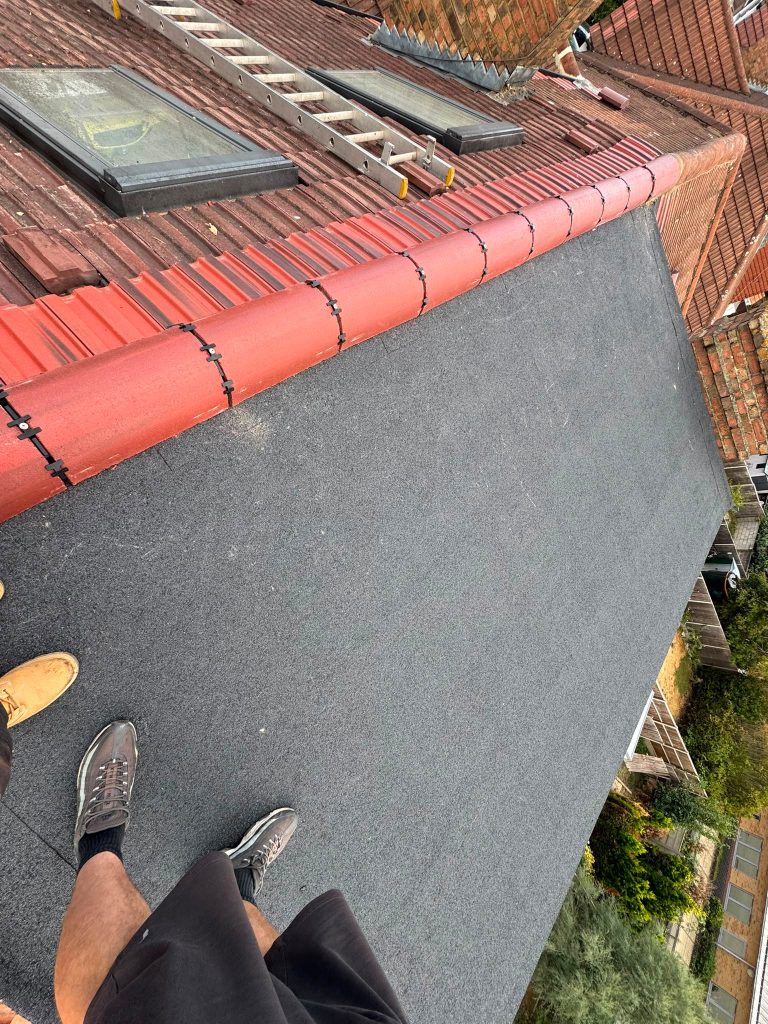


The Problem
The customer had previously asked builders to install a fibreglass roof. They were general builders, not roofers, and they did not apply a top coat. Without a top coat, a GRP roof is left unprotected from sunlight and weather, so the customer called us to redo the roof.
Work Carried Out
We applied high-quality Cure It fibreglass matting and resin, followed by a Cure It top coat, and installed new code 4 lead flashing where the roof meets the wall and door threshold.
The Result
A properly finished, seamless fibreglass roof with a protective top coat and correctly detailed lead flashings. The customer was given a 10-year guarantee.
What Is a GRP Roof?
GRP stands for glass-reinforced plastic, commonly called fibreglass. A roof is built from glass matting, resin and a top coat, producing a seamless surface with no joints. It suits small roofs, balconies and awkward shapes.
Why the Top Coat Matters
The top coat protects the resin and matting from sunlight and weather and gives the roof its finished surface. Left off, the roof is exposed and will deteriorate. That is why this customer needed the roof redone.
Why Code 4 Lead?
Where a roof meets a wall or door threshold, a flashing keeps water out. Code 4 lead is a common, durable choice for flashings of this kind.
Questions About This Job
Why did the customer call a roofer after using builders?
General builders had installed the roof but not applied a top coat. A specialist roofer finishes a GRP roof properly.
See our flat roofing page.
If Your Fibreglass Roof Was Never Finished Properly
A GRP roof only performs as well as its top coat and its edge details. If yours is chalking, crazing or lifting at the walls and door thresholds, it is worth having it looked at before water gets into the deck. We cover GRP, felt and EPDM across Putney, Wimbledon and the surrounding boroughs. See our flat roofing service or request a free survey and quote.